Dog Grooming Tracker KDP Interior
First Impressions: Clean, Purposeful, and Quietly Charming
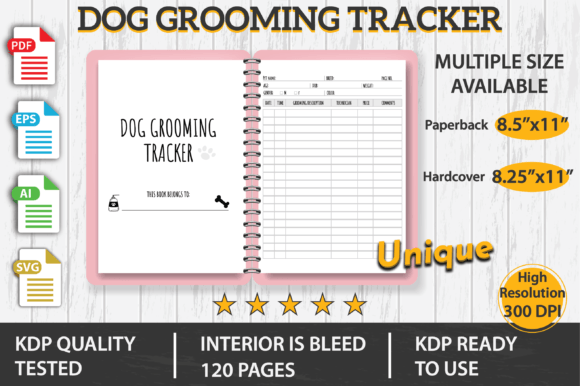
When I opened Dog Grooming Tracker KDP Interior, I wasn’t looking for flash — I was looking for function with personality. And that’s exactly what landed in my lap: a crisp, well-spaced interior layout built around practicality, not decoration. It’s not a bold graphic or a whimsical illustration — it’s a structured tracker page, designed to log baths, nail trims, ear cleanings, and coat condition over time. The mood is calm, competent, and quietly affectionate — like the kind of notebook a thoughtful dog parent keeps on their kitchen counter, not tucked away in a drawer.
A Real-World Test: Embroidering It Onto a Linen Tote Bag
Last week, I used Dog Grooming Tracker KDP Interior as the visual anchor for a custom embroidered linen tote bag — part gift, part small-batch shop item. Not as a full-page print, but scaled down and stitched as a subtle, centered motif above a simple “Pup Care Log” label. The result? A handmade product that felt intentional, not generic. Customers responded to its quiet usefulness — one buyer even said, “It’s the first tracker I’ve actually *used* — and now I want the embroidered version for my groomer.” That tells me this design carries weight beyond aesthetics. It signals care, consistency, and routine — qualities that translate beautifully into embroidery when handled thoughtfully.
Where It Shines (and Where It Needs Care)
Dog Grooming Tracker KDP Interior works best when treated as a *design asset*, not just a printable. As a machine embroidery design, it’s strongest in medium-to-large applications: tote bag fronts, pillow covers, apron pockets, or baby blanket corners. Its clean lines, generous spacing, and minimal fine detail hold up well in satin stitch and fill stitch — especially when paired with a light stabilizer on medium-weight cotton or linen.
But here’s where attention matters: avoid cramming it into small hoop sizes (under 4 inches) or onto stretchy fabrics like knits without testing. The date grids and check-in boxes rely on legibility — tiny lettering or tight spacing can blur under dense stitching or fabric movement. On dark fabric, contrast becomes critical: test thread colors in both black-and-white and color mockups. And if you’re planning a layered garment (like an embroidered patch sewn onto a denim jacket), confirm bleed and alignment — the “With Bleed” feature helps, but real-world fabric shift still happens.
Smart Pairings for Craft Business & Etsy Sellers
- Tote bags & tea towels: Ideal scale and tone — professional yet warm, perfect for pet boutiques or vet office gift shops.
- Baby embroidery & nursery decor: Works beautifully on organic cotton onesies or muslin wall hangings — just simplify the grid to key elements (e.g., “Bath • Brush • Trim”) for clarity at small scale.
- Holiday embroidery & personalized gifts: Pair with a monogrammed name or paw-print border for a cohesive, heartfelt holiday set — think “Mittens’ Grooming Log” stitched on a cozy fleece blanket.
- Commercial embroidery & small shop merchandise: Use as a consistent design element across a line — e.g., matching embroidered caps + tote + notebook cover — reinforcing brand trust through repetition and reliability.
What It Adds to Your Finished Product
This isn’t just another digital embroidery file. Dog Grooming Tracker KDP Interior elevates perceived value because it solves a real problem — tracking grooming routines — in a way that feels personal, not clinical. When stitched cleanly, it boosts customer trust: buyers see that you understand their lifestyle, not just their budget. For Etsy sellers and craft fair vendors, that authenticity translates directly into engagement. People don’t just buy a tote — they buy the idea of showing up consistently for their dog. And that idea stitches beautifully.
Practical Designer Notes Before You Stitch
- Always test on scrap fabric first — especially if using textured weaves or blends.
- Review stitch density — high-density fills may overwhelm lightweight fabrics; consider reducing fill % or switching to a lighter stitch type for delicate items.
- Confirm hoop size compatibility — while dimensions are listed (8.5×11″ and 8.25×11″), actual embroidery file boundaries depend on how the original Graphics asset was digitized.
- Inspect small details — checkboxes, date numerals, and grid lines need clear definition at your intended scale.
- Use proper stabilizer — tear-away works well for stable fabrics; cut-away adds durability for items that’ll be washed often (like kitchen towels or baby items).
- Check licensing before selling finished items — as a Kdp Interiors product, verify whether commercial use is permitted for physical embroidered goods or digital resale.
Final Thought: A Design That Earns Its Place
Dog Grooming Tracker KDP Interior doesn’t shout. It doesn’t need to. In a market flooded with decorative embroidery files, it stands out by being genuinely useful — and that usefulness translates directly into stitchable clarity, customer resonance, and small business credibility. Whether you’re building a line of pet-themed handmade products or adding thoughtful customization to your apparel offerings, this is the kind of design asset that earns repeat use, not one-time downloads. It’s not flashy — but it’s faithful. And in embroidery, faithfulness shows up in every clean line, every balanced stitch, and every happy customer who finally keeps track — beautifully.